12 Tips for Meditating Effectively in Any Setting dives into the world of meditation, offering practical advice for achieving tranquility and focus no matter where you are. From finding the perfect meditation spot to dealing with distractions, this guide equips you with essential tools to enhance your practice.
Explore the intricate balance of posture, breathing techniques, and mental focus as you embark on a journey towards self-discovery and mindfulness.
Introduction to Meditation
Meditation is a practice that involves focusing the mind on a particular object, thought, or activity to achieve mental clarity, emotional calmness, and a sense of inner peace. The benefits of meditation are numerous, including reduced stress, improved concentration, enhanced self-awareness, and better emotional health.Incorporating meditation into daily life is crucial for overall well-being. It allows individuals to cultivate a sense of mindfulness, which can help them better cope with the challenges and pressures of everyday life.
By taking time to meditate regularly, individuals can enhance their mental and emotional resilience, leading to a more balanced and fulfilling life.Meditation plays a significant role in promoting overall well-being by reducing anxiety, increasing creativity, improving sleep quality, and boosting immune function. It can also help individuals develop a greater sense of compassion, empathy, and gratitude towards themselves and others.
By making meditation a part of their daily routine, individuals can experience profound positive changes in their physical, mental, and emotional health.
Setting the Scene for Meditation
When it comes to meditating effectively, setting the scene plays a crucial role in creating the right environment for relaxation and focus.
Finding a Quiet and Comfortable Space
Choose a space where you can sit or lie down comfortably without distractions. This could be a corner in your room, a peaceful spot in nature, or a designated meditation area in your home.
- Ensure the space is clutter-free and tidy to help clear your mind.
- Use a cushion or mat to sit on for added comfort and support during meditation.
- Consider using noise-cancelling headphones or a white noise machine if you’re in a noisy environment.
Creating a Calming Atmosphere
Setting the right atmosphere can help you relax and focus during meditation.
- Dim the lights or use soft, warm lighting to create a soothing ambiance.
- Play calming music or nature sounds in the background to enhance your meditation experience.
- Consider using aromatherapy with essential oils like lavender or chamomile to promote relaxation and reduce stress.
Posture and Breathing Techniques
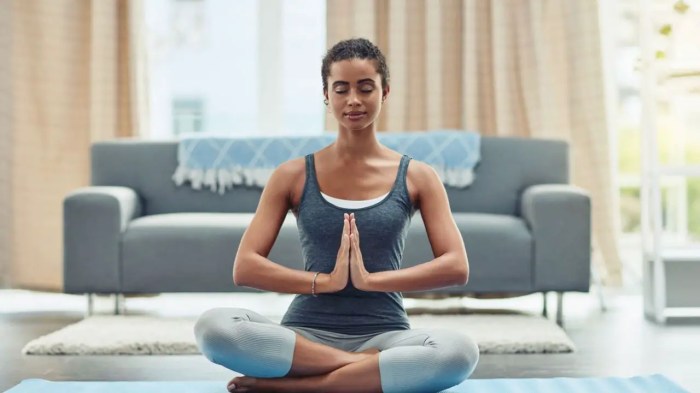
Maintaining a proper posture and utilizing effective breathing techniques are essential components of successful meditation practices. Here we will discuss the importance of posture, different sitting positions, and breathing techniques to help relax the mind and body.
Proper Posture for Meditation
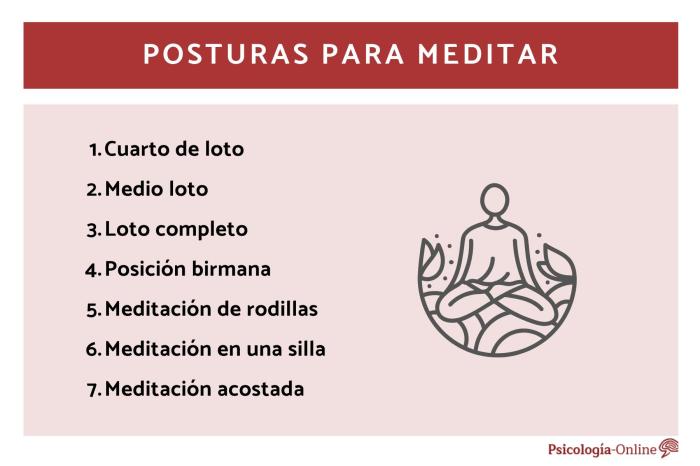
Posture plays a crucial role in meditation as it helps in promoting focus, stability, and comfort during the practice. Here are some common sitting positions suitable for meditation:
- 1. Cross-Legged Position: Sit on a cushion or mat with your legs crossed and your back straight. Rest your hands on your knees or lap.
- 2. Half-Lotus Position: Place one foot on the opposite thigh and the other foot under the opposite leg. Keep your back straight and hands relaxed.
- 3. Full Lotus Position: Cross your legs with each foot resting on the opposite thigh. Ensure your back is straight and your hands are comfortably placed.
- 4. Seated on a Chair: If sitting on the floor is uncomfortable, you can sit on a chair with your feet flat on the ground and your back straight.
Breathing Techniques for Relaxation
Controlled breathing can help calm the mind, reduce stress, and enhance the meditation experience. Here are some breathing techniques you can incorporate into your practice:
- 1. Deep Breathing: Inhale deeply through your nose, hold the breath for a few seconds, and exhale slowly through your mouth. Repeat this process several times.
- 2. Counted Breathing: Inhale for a count of four, hold for a count of four, and exhale for a count of four. This rhythmic breathing pattern can help in relaxation.
- 3. Alternate Nostril Breathing: Close one nostril with your thumb and inhale through the other nostril. Then, close the other nostril with your finger, release the thumb, and exhale through the first nostril. Repeat this process for a few minutes.
Focusing the Mind
When it comes to meditation, focusing the mind is a crucial aspect that can help deepen your practice and achieve a state of calmness and clarity. By directing your attention to a specific object or mantra, you can train your mind to stay present and minimize distractions. Here, we will explore methods for focusing the mind, tips for dealing with distractions, and the benefits of concentration during meditation.
Methods for Focusing the Mind
- Choose a focal point: Select a specific object, such as a candle flame or a picture, to concentrate on during meditation. This can help anchor your mind and prevent it from wandering.
- Repeat a mantra: Utilize a word, phrase, or sound as a mantra to focus your mind and create a sense of rhythm and flow during meditation.
- Counting breaths: Counting your breaths in sets of 10 can provide a structured way to stay focused and maintain awareness of the present moment.
Dealing with Distractions
- Acknowledge distractions: Instead of fighting distractions, acknowledge them without judgment and gently guide your focus back to your chosen object or mantra.
- Practice self-compassion: Be kind to yourself when distractions arise, as it is natural for the mind to wander. Approach distractions with patience and understanding.
- Use deep breathing: When distractions become overwhelming, take a few deep breaths to center yourself and refocus your attention on the present moment.
Benefits of Focusing on a Specific Object or Mantra
- Enhanced concentration: By focusing on a specific object or mantra, you can improve your ability to concentrate and sustain attention for longer periods.
- Reduced stress and anxiety: Concentrating on a single point can help calm the mind and alleviate feelings of stress and anxiety, promoting a sense of peace and relaxation.
- Heightened awareness: Focusing on a specific object or mantra can sharpen your awareness of the present moment, fostering mindfulness and clarity in your meditation practice.
Managing Thoughts and Emotions: 12 Tips For Meditating Effectively In Any Setting
When meditating, it’s common to experience racing thoughts and emotions that can distract you from achieving a state of calmness and focus. Learning how to manage these thoughts and emotions is essential for a successful meditation practice.
Strategies for Managing Racing Thoughts
- Acknowledge the thoughts without judgment: When racing thoughts arise, simply observe them without getting caught up in them. Recognize that they are there but do not engage with them.
- Focus on your breath: Shift your attention to your breath whenever you notice your thoughts wandering. Concentrating on your breathing can help anchor your mind and bring you back to the present moment.
- Use a mantra or phrase: Repeat a calming mantra or phrase to yourself to redirect your focus away from the racing thoughts. This can help create a sense of calm and center your mind.
Cultivating a Sense of Calmness and Acceptance
- Practice self-compassion: Be kind to yourself when racing thoughts and emotions arise. Recognize that it’s natural to experience these distractions and approach yourself with understanding and acceptance.
- Visualize a peaceful place: Imagine yourself in a serene environment that brings you a sense of calmness. Visualizing this peaceful place can help reduce stress and create a more soothing meditation experience.
Acknowledging and Letting Go of Emotions
- Recognize the emotion: Instead of suppressing or ignoring emotions that come up during meditation, acknowledge them. Identify the feeling and allow yourself to experience it without judgment.
- Practice mindfulness: Bring your awareness to the physical sensations of the emotion in your body. Notice how it manifests physically and observe it with curiosity and openness.
- Release the emotion: Once you have acknowledged and fully experienced the emotion, practice letting it go. Visualize the emotion leaving your body with each exhale, allowing yourself to release any tension or discomfort associated with it.
Time Management for Meditation
When it comes to meditation, finding the time to practice can be a challenge, especially in a busy schedule. However, making time for meditation is crucial for reaping its many benefits. Let’s explore some tips on how to manage your time effectively for meditation.
Ideal Duration for Meditation Sessions
- It is recommended to start with shorter meditation sessions, around 5-10 minutes, especially if you are new to meditation.
- As you become more comfortable with the practice, you can gradually increase the duration to 20-30 minutes per session.
- Some experienced practitioners meditate for an hour or more, but it’s essential to find a duration that works best for you and your schedule.
Tips for Making Time for Meditation, 12 Tips for Meditating Effectively in Any Setting
- Set a specific time each day for meditation, whether it’s in the morning before starting your day or in the evening before bed.
- Try to eliminate distractions during your meditation time by turning off your phone and finding a quiet space.
- Combine meditation with another daily habit, such as right after waking up or before meals, to make it a consistent part of your routine.
- Consider waking up a bit earlier or going to bed a little later to carve out time for meditation.
Benefits of Consistent Meditation Routine
- Regular meditation practice can help reduce stress, anxiety, and improve overall mental well-being.
- Establishing a consistent routine can make it easier to stay committed to your practice and experience the long-term benefits of meditation.
- Consistency can also help you improve focus, concentration, and mindfulness in your daily life.
Guided Meditation vs. Silent Meditation
When it comes to meditation, there are different approaches you can take, including guided meditation and silent meditation. Each method has its own set of benefits, and choosing the right one depends on your preferences and goals.
Benefits of Guided Meditation
- Guided meditation provides a structured approach to meditation, making it easier for beginners to stay focused.
- It can help you explore different meditation techniques and deepen your practice with the guidance of an experienced teacher.
- Guided meditation sessions often include calming music or nature sounds, creating a soothing environment for relaxation.
Benefits of Silent Meditation
- Silent meditation allows for complete freedom and independence in your practice, giving you the space to explore your own thoughts and emotions.
- It helps develop self-awareness and mindfulness as you learn to observe your thoughts without judgment or external guidance.
- Silent meditation can be a more introspective experience, allowing you to dive deep into your inner world and cultivate a sense of inner peace.
When to Choose Guided Meditation or Silent Meditation
- Choose guided meditation if you’re new to meditation or struggle to stay focused on your own.
- Opt for silent meditation if you prefer a more introspective and independent practice, or if you want to deepen your mindfulness skills.
- Experiment with both types of meditation to see which one resonates with you and supports your meditation goals.
Resources for Finding Guided Meditation Sessions
- Apps like Headspace, Calm, and Insight Timer offer a wide range of guided meditation sessions for different goals and preferences.
- Online platforms like YouTube and meditation websites provide free guided meditation recordings from experienced teachers and practitioners.
- Local meditation centers and yoga studios often host guided meditation classes or workshops for those looking for in-person guidance.
Incorporating Meditation into Daily Activities
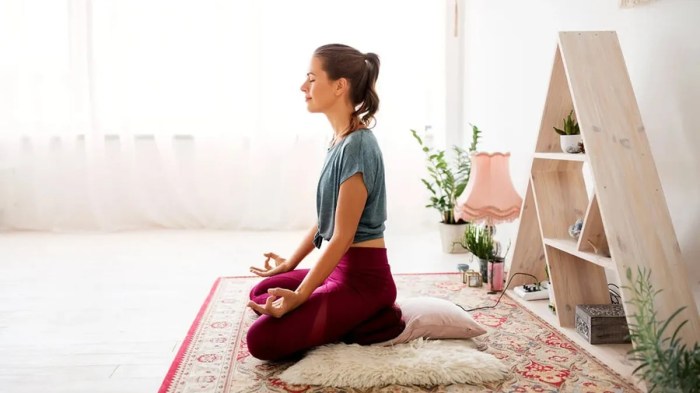
Meditation doesn’t have to be restricted to a specific time or place. By incorporating mindfulness practices into your daily activities, you can cultivate a sense of calm and focus throughout the day. This can lead to increased productivity and improved overall well-being.
Tips for Integrating Mindfulness into Daily Tasks
- Start your day with a short meditation session to set a positive tone for the day ahead.
- Practice mindfulness while performing routine tasks such as washing dishes or walking to work. Focus on the sensations and movements involved.
- Take short meditation breaks throughout the day to recenter yourself and refocus your mind.
Staying Present and Mindful Throughout the Day
- Avoid multitasking and try to focus on one task at a time, giving it your full attention.
- Practice deep breathing exercises whenever you feel stressed or overwhelmed to bring yourself back to the present moment.
- Acknowledge any distractions or negative thoughts that arise, but gently guide your focus back to the task at hand.
Examples of How Meditation Can Enhance Productivity and Focus
- Regular meditation practice can improve concentration and cognitive function, leading to better decision-making and problem-solving skills.
- By incorporating mindfulness into daily activities, you can reduce stress and anxiety, allowing you to approach tasks with a clear and focused mind.
- Increased self-awareness and emotional regulation from meditation can help you navigate challenging situations with grace and composure.
Using Meditation Apps and Tools
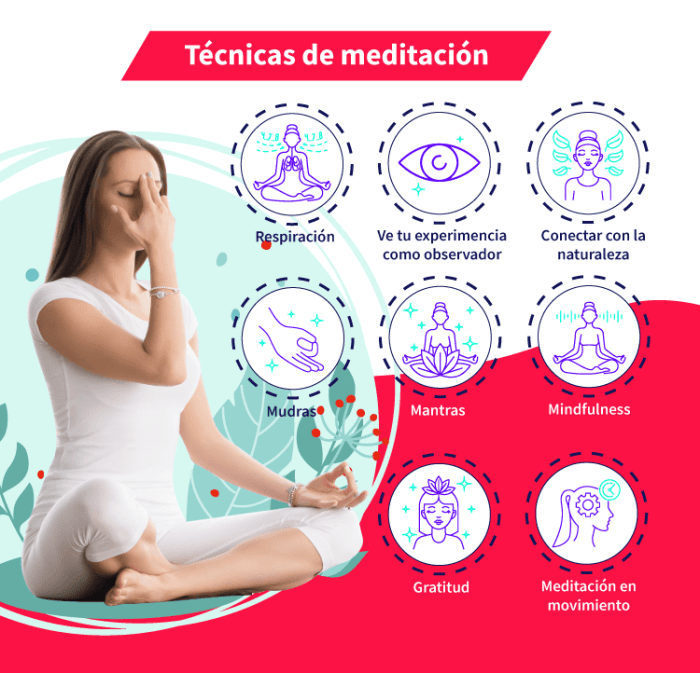
In today’s digital age, meditation apps and tools have become popular resources for beginners and experienced practitioners alike. These resources can enhance the meditation experience by providing guidance, support, and convenience.
Popular Meditation Apps for Beginners
- Headspace: Known for its user-friendly interface and guided meditation sessions, Headspace offers a variety of programs for different levels of experience.
- Calm: With features like sleep stories, breathing exercises, and guided meditations, Calm is a versatile app that can help users relax and focus.
- Insight Timer: This app offers a large library of free meditations led by teachers from around the world, making it a great choice for those looking for diverse practices.
Benefits of Using Meditation Tools
- Cushions: Meditation cushions or pillows can help improve posture and comfort during meditation, allowing for longer and more effective sessions.
- Timers: Setting a timer can help maintain focus and discipline during meditation, ensuring that you stay present without constantly checking the clock.
- Meditation Benches: These tools can provide additional support for those who struggle with traditional sitting postures, making meditation more accessible and comfortable.
Technology Support for Meditation
- Binaural Beats: Audio technology that can enhance relaxation and focus by stimulating the brain with specific frequencies, aiding in deep meditation states.
- Wearable Devices: Smartwatches and fitness trackers with meditation features can track your progress, heart rate, and stress levels, offering insights for a more personalized practice.
- Breathing Apps: Apps that guide you through breathing exercises can help regulate your breath and calm the mind, promoting mindfulness and relaxation.
Overcoming Challenges in Meditation
When practicing meditation, it is common to encounter various challenges that may hinder your progress. However, by understanding these obstacles and implementing effective strategies, you can overcome them and maintain a consistent meditation practice. It is essential to approach setbacks with patience and self-compassion, recognizing that progress takes time and dedication.
Identifying Common Challenges
- Restlessness and difficulty in sitting still
- Racing thoughts and inability to focus
- Feeling overwhelmed by emotions
- Physical discomfort or pain during meditation
Strategies for Overcoming Difficulties
- Start with short meditation sessions and gradually increase the duration as you build your practice.
- Focus on your breath to anchor your attention and calm the mind when distractions arise.
- Acknowledge and accept any discomfort or emotions without judgment, allowing them to pass without getting attached to them.
- Experiment with different postures or use props to support your body and minimize physical discomfort.
Approaching Setbacks with Patience and Self-Compassion
- Be gentle with yourself and understand that setbacks are a natural part of the meditation journey.
- Practice self-compassion by treating yourself with kindness and understanding, especially during challenging moments.
- Remember that consistency and perseverance are key to overcoming obstacles in meditation, so continue to practice regularly and with dedication.
Benefits of Group Meditation
When it comes to meditation, practicing in a group setting can offer numerous advantages. Group meditation can provide a supportive environment that encourages consistency in your practice, fosters a sense of community, and allows for shared experiences that can deepen your practice.
Advantages of Practicing Meditation in a Group Setting
- Increased motivation and accountability to stick to your meditation routine.
- Opportunity to learn from more experienced practitioners and receive guidance.
- Enhanced focus and energy through collective meditation efforts.
Fostering a Sense of Community and Support
- Sharing experiences and insights with like-minded individuals can create a sense of belonging.
- Feeling supported by a community can help reduce stress and anxiety levels.
- Group meditation can provide a safe space for emotional expression and vulnerability.
Finding Local or Online Meditation Groups to Join
- Check local community centers, yoga studios, or spiritual centers for group meditation sessions.
- Explore online platforms and apps that offer virtual group meditation sessions and communities.
- Join social media groups or forums dedicated to meditation to connect with others interested in group practice.
Reflecting on Meditation Practices
Reflecting on your meditation practices can provide valuable insights into your personal growth and progress. It allows you to take a step back and evaluate the impact of meditation on your daily life.
Encouraging Self-Reflection
- Set aside time after each meditation session to reflect on your experience.
- Ask yourself questions like: How did I feel during the practice? Did any thoughts or emotions arise? How did I respond to them?
- Keep a meditation journal to track your reflections and insights over time.
Importance of Tracking Progress
- Tracking your progress can help you identify patterns in your practice.
- It allows you to see how your meditation skills improve and how you handle challenges along the way.
- Use a meditation app or a simple calendar to mark your meditation sessions and note any changes in your mindset or behavior.
Celebrating Milestones and Achievements
- Recognize and celebrate small victories, such as completing a certain number of consecutive days of meditation.
- Share your achievements with a friend or meditation group to receive support and encouragement.
- Reward yourself with a treat or a relaxing activity to acknowledge your dedication to your meditation practice.
Wrap-Up

Immerse yourself in the transformative power of meditation as you embrace these 12 tips to cultivate a harmonious connection between mind, body, and soul. Begin your meditation journey today and unlock a world of inner peace and serenity.